In this guide
The short answer
An ice shower is controlled cold, delivered as a shower.
An ice shower is a temperature-controlled shower system that actively chills water below ordinary tap temperature. It creates intentional cold exposure through a flowing shower, not by immersing the body in a bath or plunge.
01
What makes an ice shower different from a cold shower?
Active cooling is the defining difference. An ice shower creates a colder, controllable water supply for the shower; a normal cold shower uses whatever temperature the building already provides.
That distinction matters because cold-tap temperature is not a fixed setting. It changes with climate, season, pipe routing and stored-water conditions. Turning a mixer fully to cold may feel bracing in one home and barely cool in another, but neither result is temperature-controlled.
- Ice shower
- Actively chilled, temperature-controlled shower water.
- Cold shower
- The coldest water naturally available from the property's normal supply.
- Ice bath or cold plunge
- Partial or full-body immersion in a tub or other vessel of cold water.
The term does not mean adding loose ice to a shower. A purpose-built system chills water mechanically, then delivers it through a shower outlet with the user upright and able to step away.
The Olsek range runs from controlled cold to near-freezing. Our ice shower temperature guide maps the full 1°C to 15°C range in both Celsius and Fahrenheit.
02
How does an ice shower work?
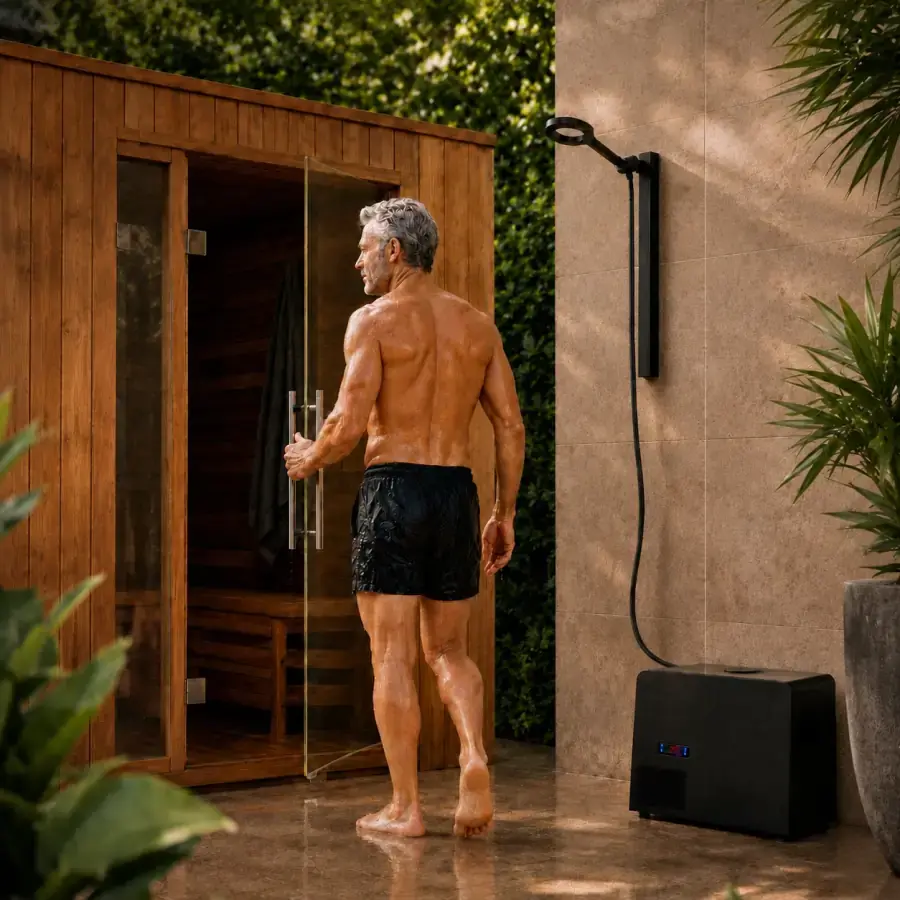
An ice shower chills a dedicated water supply, holds or circulates it at the selected temperature, then pumps it to the shower outlet.
- 01
Supply the water
The system receives water through a reservoir or a compatible feed, depending on its design.
- 02
Remove heat
An active refrigeration circuit draws heat out of the water instead of relying on ice or the incoming tap temperature.
- 03
Control the temperature
A sensor and controller manage the target setting within the system's stated operating range.
- 04
Deliver the shower
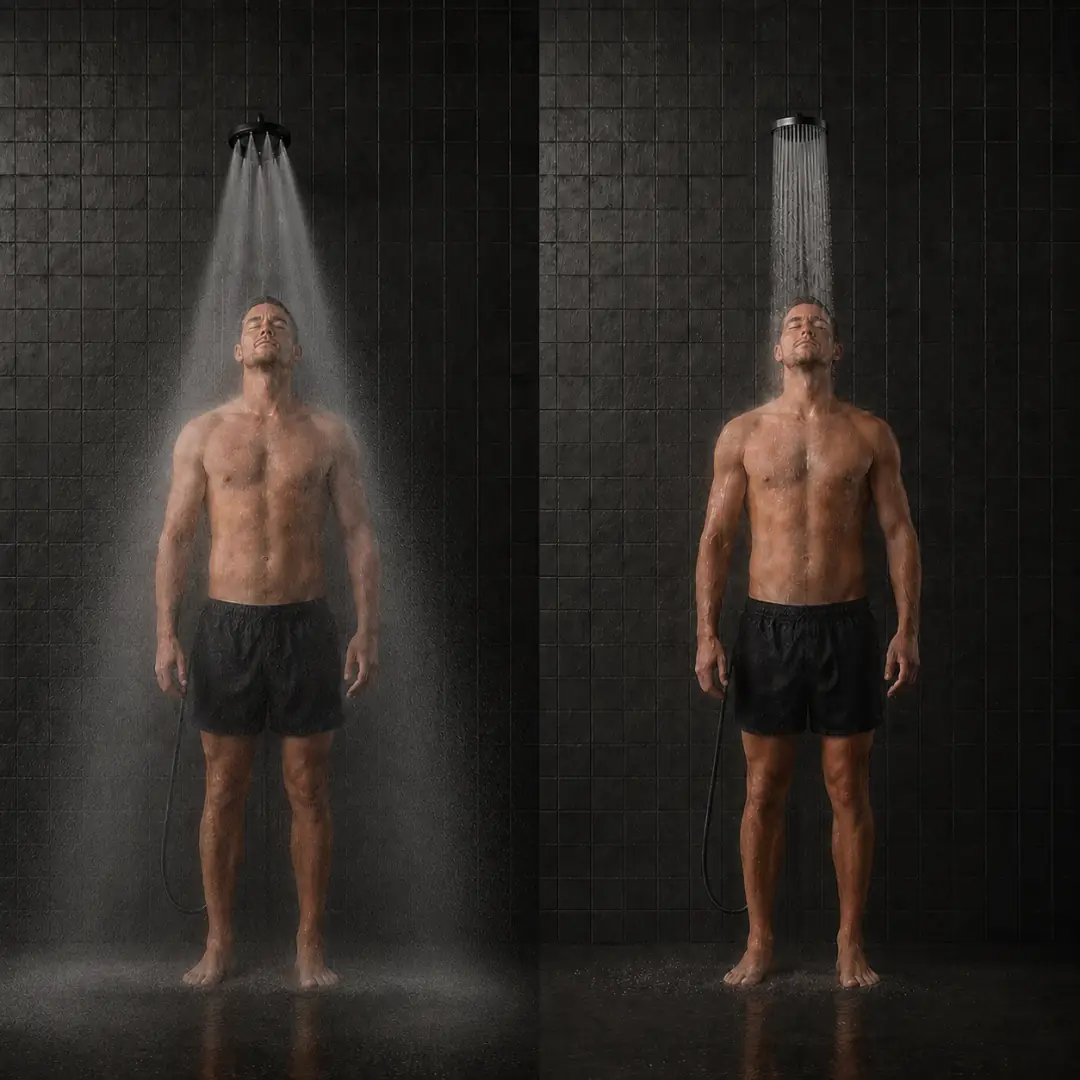
A pump moves the chilled water to the outlet, where spray pattern and coverage shape how the cold feels.
Exact plumbing, chilling time, capacity and electrical requirements vary by product. A useful specification should describe the temperature at delivery, not only the theoretical capability of a cooling component. Our dedicated guide to how an ice shower works follows the complete Olsek water path from fill to drain.